
Romney and the 6 Percent Solution
Published May 29, 2012 • Read time: 11m
Join the Conversation
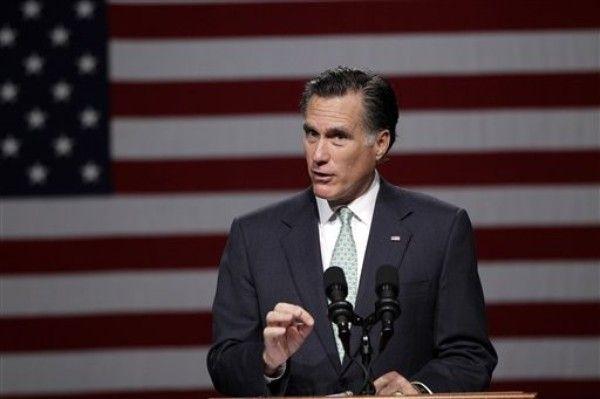
0Mitt Romney promised last week, and not for the first time, that the U.S. job market would improve significantly if he is elected president. In interviews with FOX News and Time magazine, the presumptive Republican presidential nominee went further than usual in providing a precise figure: If he is elected president he’ll bring the nation's unemployment rate down to 6 percent by the end of his first term in the White House.
If Romney were to be elected -- and managed to deliver on such a promise -- he’d more than likely be rewarded with a second term. But his pledge, offered with few specifics, raises significant questions, three in particular:
First, is the unemployment rate going to drop anyway, of its own accord, regardless of who is elected in November?
Second, assuming this won’t happen automatically, is Romney just engaging in idle campaign trail talk designed to counter President Obama’s attacks on his time as the CEO of a Boston-based venture capital firm -- or does Romney really have a plan that could achieve such results?
Third, what is that blueprint, and can it work?
Will It Happen Anyway?
Most long-term economic forecasts have the jobs picture improving gradually for the next few years. The non-partisan Congressional Budget Office has predicted that the unemployment rate will average 6.3 percent in 2016 -- the year that would be the end of Romney’s first term in office (or Obama’s second).
Citing this CBO estimate, Democrats and an array of liberal commentators were quick to accuse Romney of essentially promising nothing that wasn’t going to occur regardless of the outcome this fall. And Obama’s campaign aides went further, accusing Romney of backing away from earlier pronouncements about 4 percent unemployment being the true goal.
Lies, Assault and Cover-ups Don't Stop Donald Trump
Trump Stands by His Man; Obama on a Health Scourge; Hayden Interview; Reagan's Courage
Analysis: For Trump, Few Limits to Win-At-Any-Cost Approach
What If Clinton Isn't Indicted?
“Government economists have been clear that under current law their projection today is that unemployment will hit 6 percent by that point,” said Obama campaign spokesman Ben LaBolt. “Romney moved the goal post in just a matter of weeks. He said that he was going to get it down to 4 percent several weeks ago. Now he’s at 6 percent.”
There are a couple of problems with this critique. For one thing, Romney never made any kind of “promise” to reduce employment to 4 percent. What Romney did do, in response to administration officials’ heralding a recent drop in unemployment from 8.2 percent to 8.1 percent, was say that “anything over 4 percent is not cause for celebration.”
More significantly, the CBO has a recent track record of inaccurate economic projections. Its statutory obligation is to provide nonpartisan baseline budget projections to Congress. This is not something it can accurately do without knowing the exact nature of future changes in federal tax policy -- as well as what’s happening in the rest of the economy. This is a challenge for all economic forecasters because the two greatest variables in determining the size of the annual budget are two unknowable factors: future tax rates and the raw amount of money paid in taxes by working Americans.
In an effort to provide Congress guidance, CBO runs economic models based on hypothetical congressional actions, such as letting the Bush-era tax cuts lapse after 2012, a step which is plausible but uncertain. Even then, if CBO’s models are to be of any use, they must predict future employment rates. But its recent track record in this regard has not been impressive.
In a March 2009 evaluation of the effect of the current administration’s $787 billion stimulus package, for instance, CBO predicted that unemployment in 2012 -- this year -- would already be in the 6 percent range.
The administration was also overly optimistic: In its September 2009 “mid-session review,” the White House Office of Management and Budget estimated that the unemployment rate would be 6.5 percent by 2013, a number no one in the administration is currently using.
In other words, the same people dismissively saying that Romney’s 6 percent goal is nothing special -- and will be reached with or without him -- have been wrong in the past. The truth is that they are hoping these predictions are accurate, but they simply don’t know.
Is It All Campaign Hot Air?
Liberals find it easier to claim that a Democratic president has “created jobs” than conservatives do when making similar claims about Republican presidents. For modern Republicans, government doesn’t create jobs -- that’s the private sector’s function -- and, in the main, getting the public sector out of the way is the GOP’s idea of how to produce the environment in which employment grows.
Yet the campaign trail is not the place for nuanced arguments, and some of the claims emanating from Romneyworld are dubious at best. Last week, for example, senior adviser Eric Fehrnstrom asserted Romney should be given credit for creating over 100,000 jobs while at Bain Capital, and tens of thousands more in his single term as governor of Massachusetts.
“In that four years as governor, he created between 30,000 and 40,000 jobs,” Fehrnstrom told NBC’s Andrea Mitchell. “. . . And at Bain Capital, of course, the mission was to create value. That’s how the free enterprise system works, but when you create value, when you add value as they did in trying to improve companies, you also add employment, and a rough back-of-the-envelope estimate of how many jobs they created is well in excess of 100,000.”
Even if one accepts these generous guestimates, Fehrnstrom’s math if off-kilter. Factoring in population growth and other changes in the work force, the U.S. economy must create as many as 125,000 new jobs every month just to keep even.
And even then, those numbers are not always enough -- as the Obama administration was reminded in February when the economy gained 227,000 new non-farm jobs, while the unemployment rate remained static at 8.3 percent. The reason provided by the Bureau of Labor Statistics for this anomaly is that it meant that unemployed Americans who were previously so discouraged they hadn’t even been looking for a job were motivated to join the workforce.
That sobering explanation suggests that the federal government’s methods for counting the unemployed have been seriously understating the nature of the problem. It also means that if a Romney administration merely were to keep pace with the current unemployment rate, between 6 million and 7 million new jobs would have to be created. Lowering the rate to 6 percent? That will take about 10 million new jobs.
The U.S. economy has shown this kind of capacity before: In Ronald Reagan’s two terms, some 16 million jobs were created, most of them in his second term. In Bill Clinton’s eight years in the Oval Office, this number surpassed 22 million.
Did Reagan’s and Clinton’s policies deserve most of the credit? That’s a hard case to make, but economic performance of the country is a big part of how U.S. chief executives are judged, as the one-term presidencies of Jimmy Carter and George H.W. Bush can attest. Which is why Romney’s focus on this issue makes sense. It also explains why Obama has gone after Romney so early and often.
“You [don’t] need polling to understand why people have a visceral reaction to Mitt Romney’s time as head of Bain Capital,” former White House spokesman Robert Gibbs said Sunday on CBS News’ “Face the Nation.” “This is a criticism . . . of Mitt Romney’s only thesis for being president of the United States -- that he’s some kind of economic savior. He’s very good at making money for his partners. He’s not so good at creating jobs.”
Romney and his allies beg to differ, but the rhetorical jousting only prompts the question, which is this: How does Mitt Romney propose turning the good ship USS Economy in the right direction?
The Man With the Plan
As long ago as the New Hampshire Republican primary, Romney was describing his economic prescription as a kind of magic bullet. “What I can promise you is this: When you get out of college, if I’m president, you’ll have a job,” he told a young audience at the outset of the primary season. “If President Obama is re-elected, you will not be able to get a job.”
Campaigning in Londonderry, N.H., on Dec. 27, 2011, he forecast an “immediate buoyancy to the economy” upon his election. And last week, he told Time magazine’s Mark Halperin, “I can tell you that over a period of four years by virtue of the policies that we put in place, we’ll get the unemployment rate down to 6 percent or perhaps a little lower, depending in part upon the rate of growth of the globe as well as what we’re seeing here in the United States.”
When asked how he’d do this, Romney indicated that he believes the mere prospect of a Republican in the White House would reassure the start-up businesses and investors who are usually the engine of new employment.
“You’d see a very dramatic change in the perspective of small businesses, entrepreneurs, middle-size businesses, and perhaps even some large multinationals,” Romney prophesied. “They’d say, ‘You know what: America looks like a good place to invest again, a good place to take risk, a good place to hire again.’
“This is all about creating good jobs for middle-income Americans, and it’s a place where the president, frankly, has failed,” he continued. Apparently alluding to the Democrats’ sweeping health insurance mandate, Romney added: “His effort to put in place a series of liberal proposals he thought were historic kept his eye off the ball of getting the economy going again.”
When asked about specific measures they would take, he and his aides refer to a 59-point plan first proposed last year. In the Age of Twitter, a 59-point plan is counterintuitive in every way. The era of 140 characters? His plan, “Believe in America: Mitt Romney’s Plan for Jobs and Economic Growth,” has 160 pages. In this sense, it’s a throwback to another era -- 1992, to be exact, when Bill Clinton’s “Putting People First” was a blueprint of his economic plans for the country.
Romney’s plan is not easy to summarize quickly, which is why the candidate and his communications office refer reporters to the campaign website. But there is a consistent thread of economic conservatism running through it that contemplates lower tax rates, less federal regulations, lower government spending, and fewer protections for labor unions.
The document is avowedly pro-trade, but it’s not uncritically for “free trade.” It calls for the implementation of already-negotiated trade agreements with Colombia, Panama, and South Korea, while advocating severely toughening Washington’s stance against the supposed predatory practices of China.
Here at home, its tilt against organized labor is not subtle. Romney would guarantee secret ballots in union elections, support right-to-work laws in the states, and prohibit mandatory union dues that are automatically deducted from workers’ paychecks to be used to fund political activities. He’d also amend the National Labor Relations Act so that business owners can allocate money for new plants “where they see fit” -- a response to a specific Obama-era NLRB ruling barring Boeing from relocating a manufacturing plant in South Carolina.
The president’s surrogates can needle the Republican challenger with the plausible accusation that “Romneycare” was the inspiration for “Obamacare,” but Romney vows to work to repeal the latter as soon as he gets to the Oval Office.
He also seeks to “streamline” the Dodd-Frank law governing financial institutions and exempt midsize companies from the “onerous requirements” of Sarbanes-Oxley, the law passed in the wake of numerous accounting scandals.
Romney’s plan also contemplates vacating all Obama-era executive orders and other executive branch decisions “that unduly burden the economy,” requiring congressional approval for all such future regulations, and enacting federal tort reform designed to prevent “spurious” litigation. He would also require the EPA and other federal agencies tasked with safeguarding the environment to factor the cost in American jobs while formulating policy.
Some of the 59 items are quite specific: (“Reduce the corporate income tax to 25 percent”). Others are vague: (“Initiate review and elimination of all Obama-era regulations that unduly burden the economy”).
Finally, Romney envisions aligning federal workers’ pay and benefits with the private sector, reducing the federal workforce by 10 percent via attrition, and capping federal spending at 20 percent of GDP, and pursuing a balanced budget amendment.
Most of these proposals are boilerplate 21st century Republicanism. Some are pie-in-the-sky, others are grounded in reality. Many of them will never come to pass, and some of the ones that might be enacted would diminish the rights of the workingman and further enrich the wealthy.
But would they also put millions more Americans back to work? They might, which is why the Romney-Obama polls are so close.
Erin McPike contributed to this report.

Democrats Won the Midterms. Common Sense Won, Too
Jordanne Kemper • RealClearPolitics
The 120th Congress Shapes Up
Carolina Lumetta • RealClearPolitics
Flooding GOP Primaries With Democrats
Robert Natelson • RealClearPolitics
Washington Keeps Rewarding Oracle—Veterans Keep Paying the Price
Darin Gaub • RealClearPolitics
The Seeds of Unrestricted Warfare
John Teichert • RealClearPolitics
The Primary System Is Losing the Next Generation
Sean Trende • RealClearPolitics
RCP Today
Top stories on RealClearPolitics
The Takeaway
Polling intelligence and analysis delivered to your inbox
World News
Featuring the latest world news
Policy
Featuring the latest policy news
Support Our Mission
As part of RealClearPolitics, authors aim to provide balanced, non-partisan analysis by presenting top reporting and commentary from all sides of the political spectrum.
Trusted by policymakers and citizens alike since 2000