Romney's Russia Comments Reflect Long-Held Distrust
Published March 29, 2012 • Read time: 4m
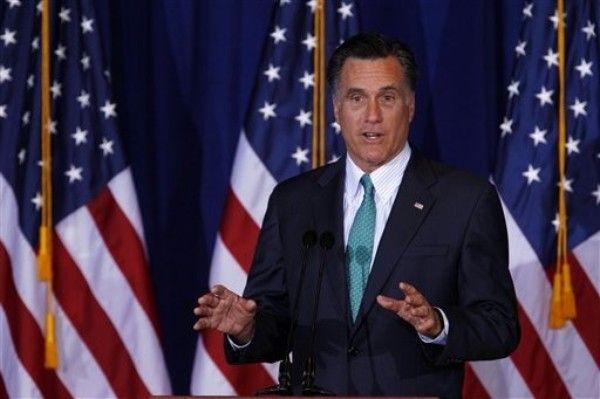
When Mitt Romney referred to Russia as "our number one geopolitical foe" in an interview with CNN's Wolf Blitzer on Monday, Russian officials and left-leaning American commentators alike portrayed the comment as one more befitting a Cold War spy movie than a serious American politician in 2012.
Russian President Dmitry Medvedev dismissed the remark as stemming from "ideological cliches" and said that it "smacks of Hollywood."
MSNBC host Chris Matthews’ response was steeped in ridicule. “I don’t know what decade this guy’s living in,” he said on Tuesday night’s episode of “Hardball.” “It sounds like, if not ’72, ’52 even. It’s not Stalin over there, it’s not Khrushchev, it’s not Brezhnev. It’s Medvedev.”
Romney’s characterization of Russia as America’s foremost nemesis came after President Obama, at a South Korean summit meeting, was heard on an open microphone asking Medvedev for “patience” and “space” to make progress on bilateral issues, including a proposed missile-defense system for Europe that Russia opposes. Obama had suggested that he would be more capable of working toward an agreement with Medvedev’s successor, Vladimir Putin, after his own re-election.
While Obama’s comment caused an outcry among conservatives, who saw it as evidence the president plans to capitulate on missile defense in his second term, the consensus among Romney’s critics was that the former Massachusetts governor had overreached.
But his remark appears not to have been an off-the-cuff throwaway line. Instead, it reflects his long-held negative view of the Russian regime -- and his belief that the Obama administration’s “reset” policy has been unwarranted and ineffective.
Is Trump Right About NATO?
Over Here: Competence Amid Repulsive Politics
We're Not a Poor Country, Donald
U.S. Officials Say 2 Americans Died in Brussels Attack
The GOP front-runner has long suggested that the former Cold War adversary would be regarded by his administration as something closer to an enemy than a friend.
In his book, “No Apology,” Romney listed Russia as one of four powerful international actors -- along with China, “the Jihadists” and the United States -- that have competing strategies to control the direction of the 21st century.
“We are now obliged to be wary and vigilant once more, because by mid-century, our grandchildren may well view Russia with the same concern that we and our parents once did,” Romney wrote.
And in a December interview with RealClearPolitics, he asserted that Putin was aiming to return his country “to the glory days of the Soviet Union,” and he encouraged the Russian people to usher him out of office.
“I think his brand of democracy is not something we would recognize, and I hope the Russian people are able to find leaders that are more willing to represent the interests of the people,” Romney said.
The candidate’s most recent comments come as Russia has drawn international criticism this year for renouncing Western sanctions against Iran and for joining China in vetoing a United Nations Security Council resolution condemning Syria’s violent crackdown on anti-government protesters.
Growing U.S. frustration with Russia has occasionally boiled over within the Obama administration, too. Secretary of State Hillary Clinton last month called Russia and China’s veto of the Syria resolution “despicable.”
“And I ask: Whose side are they on?” Clinton said. “They are clearly not on the side of the Syrian people."
Such criticism has been more overt, and consistently uttered, among Republicans. ABC News reported on Wednesday that House Speaker John Boehner sent a letter to Obama saying that he was “alarmed” by the president’s message to Medvedev.
“It is increasingly evident that Russia is intent on expanding its boundaries and power through hostile acts -- including invading a neighboring American ally,” Boehner wrote.
Romney’s repeated call to take a tougher line against Russia is one that has been especially popular in conservative foreign policy circles.
“[Romney] tried to distinguish himself from the soft rhetoric of reset, and I think justifiably so,” said Ariel Cohen, a senior research fellow for Russian and Eurasian studies at the Heritage Institute.
“Anti-Americanism is at Cold War highs in the Russian media and there’s no reason to expect that’s going to change, because Putin has no use for the United States, even under the Obama administration.”
Still, administration officials and top Republicans have stopped well short of Romney’s depiction of Russia as the “number one foe.”
Romney’s particularly negative take on the regime and his warnings about the scale of its ambitions stand out even among members of his own party, but he has been consistent in expressing that view.
In fact, he upped the ante on Wednesday in an op-ed in Foreign Policy magazine that accused Obama of demonstrating “breathtaking weakness” in his dealings with Moscow.
The Cold War may be a distant memory for many Americans, but for Romney it apparently remains fresh. And his recent comments represent only a slight escalation of his previously expressed views on U.S.-Russian relations.

Newsom Defies Voters, Juries and Lawmakers To Spare Murderers While Defending Abortion
Curtis Hill • RealClearPolitics
The Algorithmic Tilt
Frank Filingeri • RealClearPolitics
A RealClear Thanksgiving: Investing in a Better Future
David DesRosiers • RealClearPolitics
Trump’s Newsom Problem: Antagonist-in-Chief
Carolina Lumetta • RealClearPolitics
America’s Free Spirit
John Maxwell Hamilton • RealClearPolitics
The GOP Majority Should Go Out in Glory
Daniel McCarthy • RealClearPolitics
RCP Today
Top stories on RealClearPolitics
The Takeaway
Polling intelligence and analysis delivered to your inbox
World News
Featuring the latest world news
Policy
Featuring the latest policy news
Support Our Mission
As part of RealClearPolitics, authors aim to provide balanced, non-partisan analysis by presenting top reporting and commentary from all sides of the political spectrum.
Trusted by policymakers and citizens alike since 2000