Obama's Super Tuesday: In Command but Cautious on Iran
Published March 7, 2012 • Read time: 8m
Join the Conversation
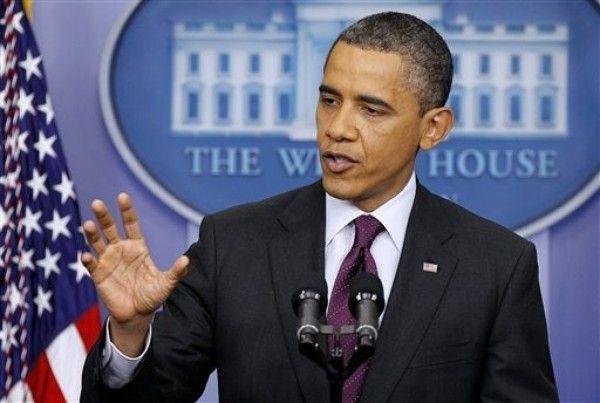
0President Obama's smile stretched ear-to-ear, although a muscle beneath his right eye beat in tiny, distracting spasms.
Super Tuesday at the White House produced the first Obama news conference of 2012, after a dry spell of five months. From the White House perspective, it was the perfect afternoon to be on offense.
Republican rivals romped through primaries in Ohio and Tennessee and eight other states, in a slugfest over the Oval Office. And the man with the 100-watt smile stepped into a crowded, overheated White House briefing room to coolly emphasize that he has the job those others seek, and is working hard to keep it.
What a difference a few months can make. Unemployment is trending down, the president’s job approval numbers are up, and consumer confidence is the highest it’s been in a year. In head-to-head match-ups against his GOP challengers, Obama is ahead in the most recent polls. And during a 44-minute news conference, the economy was not the press corps’ preoccupation. Obama needed to bring the larger economy into the conversation himself.
“We've clearly seen some positive economic news over the last few months,” he said. “Businesses have created about 3.7 million new jobs over the last two years. Manufacturers are hiring for the first time since the 1990s. The auto industry is back and hiring more than 200,000 people over the last few years. Confidence is up. And the economy is getting stronger.”
When the president was asked what he would say to Mitt Romney, who called Obama the most “feckless” president since Jimmy Carter because of his Iran policy, Obama responded with an easy grin. “Good luck tonight” was his message. When a reporter, sounding dubious, followed with, “No really,” the president was clearly having some fun. “Really,” he said through a smile that was at once warm and playfully taunting.
Lies, Assault and Cover-ups Don't Stop Donald Trump
Trump Stands by His Man; Obama on a Health Scourge; Hayden Interview; Reagan's Courage
Analysis: For Trump, Few Limits to Win-At-Any-Cost Approach
What If Clinton Isn't Indicted?
Obama expects to face Romney in the general election, and his campaign team anticipated Tuesday’s results would help clarify the GOP delegate math, with 424 of the necessary 1,144 delegates up for grabs.
At the White House, a Super Tuesday news conference was an opportunity for Obama to seize some media coverage, and to appear patient and presidential. The afternoon event was intended to be something of a contrast between the messy, bruising race among warring Republicans, and an incumbent president showing that he is focused on the responsibilities and headaches of governing.
Obama talked up his influence on a recovering economy, wars ongoing and contemplated, the achievements of Congress, and on policies important to American women.
About the threat of war with Iran, Obama’s policy message was that he and Israeli Prime Minister Benjamin Netanyahu are determined to prevent Tehran from developing a nuclear weapon, and that all options for prevention -- not containment -- are on the table. His political message was that Republican musings about war with Iran have been “bluster.”
Netanyahu, one day after meeting Obama at the White House, met with congressional leaders on Capitol Hill Tuesday. When asked by a reporter if he had decided to attack Iran preemptively to secure Israel from a neighboring threat, the prime minister said he would not discuss his decision-making.
During a forceful speech Monday night to the annual policy conference of the American Israel Public Affairs Committee in Washington, Netanyahu said diplomacy and sanctions have not succeeded in reducing Tehran’s nuclear threat. Iran remains a danger to the United States, to Israel, and to the world, he said.
Also on Tuesday, the five permanent members of the United Nations Security Council and Germany accepted a February offer from Iran to resume official talks about its disputed uranium enrichment activities.
"My friends, Israel has patiently waited for the international community to resolve this issue," Netanyahu told AIPAC on Monday. "We've waited for diplomacy to work. We've waited for sanctions to work. None of us can afford to wait much longer. As prime minister of Israel, I will never let my people live in the shadow of annihilation."
Many among the 13,000 Jewish activists at the gathering leaped to their feet to applaud.
Netanyahu is widely viewed as an astute analyst of domestic U.S. politics, and a leader who is confident Israel enjoys strong bipartisan support in Congress.
Obama captured 78 percent of the Jewish vote in 2008, reversing some of the gains the GOP saw among that slice of the electorate in 2004. While Republicans do not imagine their nominee can win a majority of a reliably Democratic and liberal demographic, the party’s emphasis is on peeling Jewish votes away from the Democratic ticket in key counties in battleground states, where the contest could be decided.
Tevi Troy, formerly an adviser in the Bush White House who helped expand Jewish support for the GOP ticket to 24 percent in 2004, believes enthusiasm for Obama among Jewish voters could drop this year. Troy, now a senior fellow at the Hudson Institute who backs Romney, said in an interview that even a slight surge in the Jewish vote could prove helpful to the Republican ticket on the margins, and the example he cited from 2004 was Ohio’s Cuyahoga County, where he said the Jewish vote for John Kerry was less than Democrats banked on. While Kerry lost Ohio to Bush by about 140,000 votes, studies that relied on exit polling found it difficult to come up with precise measures of the Jewish vote by individual states.
The list of states where the margin of support among Jewish voters could conceivably change the outcome this time includes Ohio, Michigan, Pennsylvania, Florida, Virginia, and even New Jersey, Troy said.
Romney, Gingrich and Santorum all spoke Tuesday to AIPAC, and they were critical of Obama’s preference for continued diplomacy and global sanctions to pressure Iran back to the negotiating table. Ron Paul parted company with his GOP rivals Tuesday night, calling contemplations of war with Iran “reckless.”
Obama cautioned his challengers that “beating the drums of war” carries consequences, and that advocates for military strikes against Iran owe it to the American people to describe “what they think the costs and benefits would be.”
The president eagerly described himself as a commander-in-chief who understands all too well the horrors of war in Iraq and Afghanistan and is eager to avoid more war. In that, Obama stands with a majority of Americans, according to recent polls, even if they express doubt that sanctions can succeed in eliminating the Iranian threats.
“We have a window through which we can resolve this issue peacefully,” the president continued. “We have put forward an international framework that is applying unprecedented pressure. The Iranians just stated that they are willing to return to the negotiating table. And we've got the opportunity, even as we maintain that pressure, to see how it plays out.”
Referring to the campaign rhetoric about Iran from Romney, Santorum and Gingrich, Obama said his worries include the men and women who would fight such a war -- a conflict that he believes right now would be a mistake. “Typically, it's not the folks who are popping off who pay the price,” he commented.
“This is not a game. There’s nothing casual about it.” The president discounted campaign discussions about Iran as “a lot of bluster and a lot of big talk,” and he said his rivals’ proposals are less about solving a serious problem than scoring political points.
“Now, the one thing that we have not done is we haven’t launched a war,” he added. “If some of these folks think that it’s time to launch a war, they should say so. And they should explain to the American people exactly why they would do that and what the consequences would be. Everything else is just talk.”
Speaking to a segment of the electorate he hopes to capture in November, the president waved off a question about Republicans’ discussions of women’s issues, including contraception. Women voters, he said, are not moved by a single issue in any campaign, and they will choose the next president based on a spectrum of assessments, many of them tied to their families, their children and their economic well-being.
In response to a question, he declined to call the GOP contest “anti-women,” but Obama said “Democrats have a better story to tell to women about how we’re going to solidify the middle class and grow this economy, make sure everybody has a fair shot, everybody is doing their fair share, and we got a fair set of rules of the road that everybody has to follow.”
Even in the midst of evidence that the economy is improving, the president was careful to empathize with Americans still searching for work, and many who are struggling to afford high-priced gasoline.
“There are still millions of Americans who can’t find a job,” Obama said. “There are millions more who are having a tough time making the rent or the mortgage, paying for gas or groceries. So our job in Washington isn’t to sit back and do nothing, and it’s certainly not to stand in the way of this recovery. Right now we've got to do everything we can to speed it up.”
Newsom Defies Voters, Juries and Lawmakers To Spare Murderers While Defending Abortion
Curtis Hill • RealClearPolitics
The Algorithmic Tilt
Frank Filingeri • RealClearPolitics
A RealClear Thanksgiving: Investing in a Better Future
David DesRosiers • RealClearPolitics
Trump’s Newsom Problem: Antagonist-in-Chief
Carolina Lumetta • RealClearPolitics
America’s Free Spirit
John Maxwell Hamilton • RealClearPolitics
The GOP Majority Should Go Out in Glory
Daniel McCarthy • RealClearPolitics
RCP Today
Top stories on RealClearPolitics
The Takeaway
Polling intelligence and analysis delivered to your inbox
World News
Featuring the latest world news
Policy
Featuring the latest policy news
Support Our Mission
As part of RealClearPolitics, authors aim to provide balanced, non-partisan analysis by presenting top reporting and commentary from all sides of the political spectrum.
Trusted by policymakers and citizens alike since 2000