
To Allay Outcry, Obama Eases Birth Control Rule
Published Feb. 10, 2012 • Read time: 7m
Join the Conversation
0In tennis, it's called an unforced error. In presidential debates, it's called an "oops" moment. With President Obama's contraception policy repair work Friday, the administration bobbled without conceding a mistake, "accommodated" but denied a retreat, and pointed the finger at critics it accused of being too eager to play "political football."
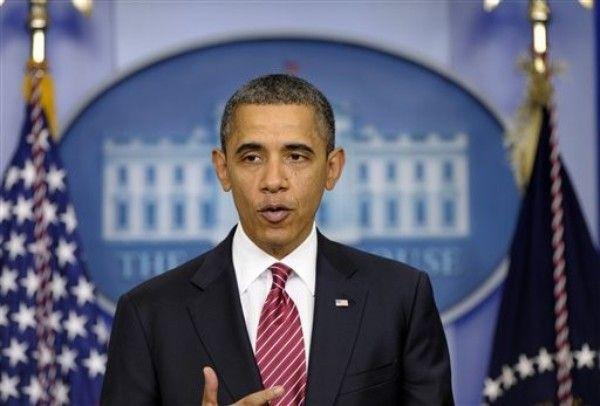
After weeks of public furor over new requirements for no-cost contraception coverage for workers, the president walked into the White House briefing room with Department of Health and Human Services Secretary Kathleen Sebelius to explain how the administration would navigate around the objections of Catholic bishops, faith-based institutions and some Catholic critics from both political parties -- without forfeiting health policy objectives.
Those critics had argued since January that the president’s policy trampled on religious liberties, while women supportive of the policy said preventive health insurance coverage, including no-fee birth control, was moreover an issue of freedom and choice for all workers.
“We've reached a decision on how to move forward,” Obama announced, declining to take any questions from reporters. “Under the rule, women will still have access to free preventive care that includes contraceptive services -- no matter where they work, so that core principle remains.” Church employers, the administration stressed, are exempted if they wish.
But to fix a policy under fire, the White House scrambled, hunting for a way to ensure that women working for religious nonprofits, such as hospitals, schools and social service agencies, could access contraception at no cost -- mirroring the benefits of other American women covered by health insurance -- without involving their employers, who might object to endorsing, providing or paying for birth control for religious reasons.
President Calls Drug Addiction a Health Problem
Lawmakers Hail New Opioid Rules -- But Call for More
No Opiates for the Masses?
Obamacare's Tax-Time Torment
Sebelius, in subsequent television interviews, conceded that the firestorm over religious freedom and women’s contraceptive rights prompted the president to instruct HHS to “speed up” its deliberations about how to thread a needle -- abridging a leisurely year of considerations to an expedient handful of days. A faster timetable was Obama’s most candid concession that his health care effort had run off the tracks, threatening to become a political liability with women voters, or Catholic critics, or both.
“I directed [HHS] to speed up the process that had already been envisioned,” the president said as he explained his aims. “We weren’t going to spend a year doing this; we're going to spend a week or two doing this.”
The administration is now mandating that insurance companies, under the Affordable Care Act, provide contraception coverage at no cost to employees and reach out to women employed in religious-affiliated workplaces to inform them of said benefit. Senior White House officials were noncommittal Friday about whether health insurers were happy about the new policy.
A spokesman for House Speaker John Boehner told reporters his boss would continue “to work toward a legislative solution” because the Catholic Church and other interests “are not yet convinced” that Obama’s policy adjustment “doesn’t constitute an attack on religious freedom.”
“We reserve judgment on the details until we have them,” Cardinal-designate Timothy Dolan, the president of the U.S. Conference of Catholic Bishops, said Friday in a statement. “Today’s decision to revise how individuals obtain services that are morally objectionable to religious entities and people of faith is a first step in the right direction,” Dolan said. “We hope to work with the Administration to guarantee that Americans’ consciences and our religious freedom are not harmed by these regulations.”
Majority Leader Mitch McConnell, in a statement released late Friday afternoon, was less collegial: “This whole episode demonstrates why politicians should not be the ones to make determinations about religious beliefs and is just another reason why the deeply flawed health law needs to be repealed.” He called the administration’s original rule unconstitutional, adding, “They’re not sorry they violated the First Amendment, they’re sorry Americans didn’t agree with them when they did.”
Democratic political consultant Robert Shrum commended Obama and the administration for crafting a compromise that he labeled “a big win.” Conceding it might have been better to find the compromise in January than in February, he nonetheless told RCP in an interview that Obama was unlikely to suffer any long-term political damage from an interlude that appeared to energize Democratic women -- while also exposing a Republican Party “in danger of drifting back” to policies that to many voters seem anti-women.
A lesson Obama could take from the experience, Shrum added, is “when you get into a problem, don’t stand your ground for reasons of pride. Resolve it.” Another lesson, he added, might be that the rise of social, cultural campaign issues could prove more harmful to the Republican Party than to Democrats. The contraception eruption coincides with Mitt Romney’s primary challenge from Rick Santorum, who is appealing to conservative voters and tugging the president’s chief rival further to the right, Shrum noted. Romney, whose father served as governor of Michigan, could be undercut by Santorum in that state’s upcoming primary, a turnabout that to Democrats could appear lucky.
Administration officials said Obama’s new approach on the birth control mandate would prove “net cost neutral” to insurers, even if contraception is provided free to some women by the companies, because the alternative -- pregnancy -- is more expensive to insure. They also said the women who will receive the preventive health care benefits directly from insurance companies, rather than through their employers, would not receive inferior brands or versions of contraception that economizing insurers might prefer. “We don’t think they’ll be skimping,” one senior administration official told reporters during a conference call arranged by the White House.
America’s Health Insurance Plans, a powerful member of Washington’s health care lobby, remained noncommittal on the compromise Friday. In a statement, its spokesman said AHIP was “concerned about the precedent this proposed rule would set,” and promised to weigh in publicly through the regulatory process as the HHS rule is implemented. AHIP made clear that health insurance plans “have long offered contraceptive coverage to employers” who buy the coverage for workers. The reference to employers was noteworthy because the administration is now requiring insurers to reach around employers to contact female employees at religious-affiliated nonprofits.
Hawaii’s state-based requirements in such circumstances had long been viewed as a model for the administration’s approach, but it took the administration months -- from 2011 through Jan. 20, 2012 (when its rule was announced and reproached by the U.S. Conference of Catholic Bishops) and onward until Friday -- to develop a rule that closely tracked the Hawaii compromise.
“If a woman’s employer is a charity or a hospital that has a religious objection to providing contraceptive services as part of their health plan, the insurance company -- not the hospital, not the charity -- will be required to reach out and offer the woman contraceptive care free of charge, without co-pays and without hassles,” Obama explained.
Analysts on all sides of the issue appeared to agree the administration could have helped itself by seizing Friday’s alternative from the outset. Not every detractor was mollified, however.
Some Catholic Democrats running in tough campaigns this year had been openly critical of the HHS rule. Several sounded relieved Friday when the White House acted to release some steam from the controversy. One of them was Tim Kaine, once Virginia’s governor and formerly the head of the Democratic National Committee, who is seeking an open Senate seat against Republican George Allen, a sharp critic of Obama’s contraception policy.
“From the day the new regulations were announced,” Kaine said in a written statement circulated by the president’s press office, “I’ve encouraged the White House to find a better solution that embraces and protects both access to contraception and religious freedom, and I am proud to support the new steps announced today.”
The White House also distributed supportive statements from the Planned Parenthood Federation of America, the National Abortion Rights Action League, the Catholic Health Association of the United States, Catholics United, and statements from “national faith leaders” commending the president and the administration.

Democrats Won the Midterms. Common Sense Won, Too
Jordanne Kemper • RealClearPolitics
The 120th Congress Shapes Up
Carolina Lumetta • RealClearPolitics
Flooding GOP Primaries With Democrats
Robert Natelson • RealClearPolitics
Washington Keeps Rewarding Oracle—Veterans Keep Paying the Price
Darin Gaub • RealClearPolitics
The Seeds of Unrestricted Warfare
John Teichert • RealClearPolitics
The Primary System Is Losing the Next Generation
Sean Trende • RealClearPolitics
RCP Today
Top stories on RealClearPolitics
The Takeaway
Polling intelligence and analysis delivered to your inbox
World News
Featuring the latest world news
Policy
Featuring the latest policy news
Support Our Mission
As part of RealClearPolitics, authors aim to provide balanced, non-partisan analysis by presenting top reporting and commentary from all sides of the political spectrum.
Trusted by policymakers and citizens alike since 2000