
Romney and the Klan: A Cautionary Tale
Published Dec. 30, 2011 • Read time: 8m
Join the Conversation
0James Monroe had a foreign policy problem -- several, actually -- but he devised a solution that solved them all. The president unveiled this masterstroke in his 1823 State of the Union message to Congress. In time, his fiat would become known as the Monroe Doctrine, and was often summed up in four words: “America is for Americans.”
Since Monroe’s administration was sticking up for the Latin American liberators busily shedding the yoke of Spain, this sentiment met with appreciation in the southern hemisphere. Times change such perceptions, however, and in this case with some reason: Theodore Roosevelt’s “codicil” to the Monroe Doctrine seemed to invite U.S. interference in the affairs of our neighbors to the south -- and 188 years later, the mere mention of Monroe can send Latin America leaders like Hugo Chavez and Daniel Ortega into a state of apoplexy
“The Monroe Doctrine was imposed here: America for Americans, the Yankees,” Chavez complained earlier this month while kicking off a Community of Latin American and Caribbean States confab in Venezuela. “They imposed their will during 200 years, but that’s enough!”
Ortega agreed with his host. “Today,” Nicaragua’s president told Venezuelan reporters after deplaning in Caracas, “we are going to give a death sentence to the Monroe Doctrine.”
But now, in the context of a U.S. presidential election, it’s Mitt Romney’s problem, this supposed Yanqui attitude of superiority. Romney’s apparent sin has been to go around saying he doesn’t want America like becoming Europe -- the purported fantasy of various Democrats, including the man currently occupying the Oval Office.
Over Here: Competence Amid Repulsive Politics
We're Not a Poor Country, Donald
What America Should Learn from the Attack in Brussels
Anti-Muslim Rhetoric Profits the Enemy
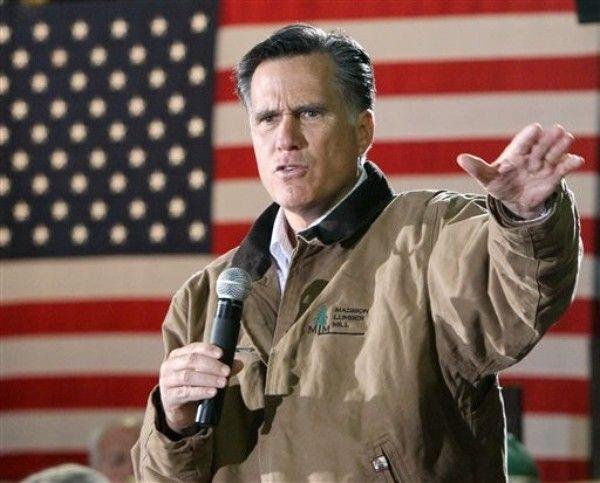
“We have on one side a president who wants to transform America into a European-style nation,” Romney said in Iowa recently. “And you have on other hand someone like myself that wants to turn around America and keep America America with the principals that made us the greatest nation on Earth.”
James Monroe and Simón Bolivar would probably have agreed with this sentiment -- they didn’t think too highly of European society either -- but these days it’s not enough for Romney’s critics to accuse the former Massachusetts governor of being too retro or having a tin ear. Instead they felt compelled to call Romney a racist and a xenophobe, and a plagiarist to boot. Whose material is he stealing? Not Monroe’s – oh no, indeed -- Romney is said to have channeled the Ku Klux Klan. This stuff makes it into the newspapers (at least the online version), is repeated on television -- you don’t have to guess which network -- and is all over the Internet, which, of course, is where this witless slander started.
And therein resides part of the problem with modern American politics.
The advent of the Internet -- and the “New Media” it gave rise to -- has democratized political discourse in this country. For the most part, this has been a good thing. It has helped expand the pool of available voices, made establishment journalism more accountable, and empowered those without deep pockets to be part of the civic conversation. Let a thousand flowers bloom.
At the same time, while undermining a business model that had been in place for more than 200 years, the New Media threaten to sweep aside what was best about the Old Media. Checking facts, giving both sides of a story, making sure quotes are accurate, providing honest historical context, striving for fairness -- these aren’t fusty niceties, they are the essence of reliable human communication. Truthful discourse isn’t possible without them.
The latest example -- the comparison of Mitt Romney to the Ku Klux Klan -- is an instructive case study in how the media can stumble while trying to reconcile new market demands with time-honored values. Our tale begins on Monday, Dec. 12, when a handful of bloggers whose politics are left-leaning and reliably partisan homed in on a Romney quote, uttered the week before in Cedar Rapids, Iowa.
“Keep America American,” Romney was quoted as saying. The line, plucked out of a lengthier quote in a Dec. 9 Los Angeles Times story by political correspondent Seema Mehta, was passed around by liberal writers and activists -- who then lashed out at Romney.
Steve Benen of Washington Monthly opened his Dec. 12 column with this line and a link to the LAT story. “Maybe it’s just me, but I find phrases like ‘keep America American’ kind of creepy,” he wrote. “Take Mitt Romney’s stump-speech rhetoric, for example.”
The following day, John Aravosis, a left-leaning blogger and Democratic Party activist, posted a brief item on his site, upping the ante with the headline, “Did Romney adopt KKK slogan: ‘Keep America American’?” Aravosis also linked to the Times story and posted a video of Romney making the same point in another speech cut as a campaign ad.
This piqued the interest of the Huffington Post, which asserted that the phrase “was a central theme of Ku Klux Klan publications in the 1920s, and served as a rallying cry for the white supremacist group's campaign of violence and intimidation against black Americans, as well as Catholics, gay people and Jews.”
The HuffPo could have included Mormons, the main target of the Klan in Utah in the 1920s, but opted instead for adding, “The slogan was first used in the 1850s by members of the anti-immigrant, anti-Catholic movement called the ‘Know Nothing Party,’ many of whom were reacting to the dramatic influx of immigrants in the mid-19th century, especially those fleeing Ireland’s Potato Famine.”
This was beginning to sound too much like The Onion. And you’d have thought that linking Irish-hatred and a tolerance for mass starvation to Mitt Romney would give journalists pause. It did, too, but just a tad too late. First, The Washington Post and MSNBC went with the Romney-Klan angle. The Post piece, published in the paper’s online edition, was written by a young reporter whose beat is cyberspace and whose job is to be the paper’s “sounding board for news and conversation that’s reverberating online.”
The Post reporter added a new factoid of her own: “When former Speaker of the House Newt Gingrich announced his presidential run earlier this year, he launched his official campaign Web site using the slogan ‘Win the future.’ It was a phrase used in some variation or another 11 times by Obama in his State of the Union speech this year.”
This point, made previously by other bloggers, was not only un-factual, it was backwards: Newt Gingrich had written a book called “Winning the Future,” which was published in January 2005 as Barack Obama was taking his oath of office as freshman senator. The phrase was in common use before that, as journalist Jill Lawrence pointed out in a well-reported piece.
By Tuesday, Dec. 13, the Romney camp was starting to push back -- and the journalistic grown-ups were starting to take notice. At MSNBC, Chris Matthews, hardly a milquetoast, issued an abject apology to Romney. At The Washington Post, editors published an extraordinary correction above its Romney-Klan piece. Ombudsman Patrick Pexton weighed in as well.
Pexton made several points about digital age journalism, starting with how the pressure to get things posted quickly can overwhelm prudence -- in this case, even a response from Romney’s camp. He suggested that reporters, particularly those who came of age in the digital age, rely too much on email and online research, instead of picking up the telephone. And he noted that this angle didn’t even pass a common-sense test. Romney and the Ku Klux Klan: Really?
The point about not getting a response from Romney was not a throwaway line. In traditional journalism, we don’t “get the other side” merely as a fig leaf to protect ourselves from allegations of bias. We seek comment from both sides because there are invariably two (or more) sides to any story. It’s called reporting. Real journalists attempt to ascertain facts, not just get a pro forma denial.
In this instance, the Romney’s campaign’s response was highly relevant to the fact-gathering process: They maintained that the candidate never said, “Keep America American.” They line, they insisted, was “Keep America America.”
It may sound like a subtle difference, but it isn’t. The first version does sound xenophobic. Not like the Ku Klux Klan, perhaps, but it does have a ring of nativism to it -- at a time when illegal immigration is a hot-button issue. The second version is kind of boilerplate Republican Party talk about not going all welfare-state-ish, secular and politically correct.
So which was it? Well, the video posted by John Aravosis himself has Romney saying, “We will keep America America.” And what of the Los Angeles Times quote? The context in that story suggests that Romney didn’t say “keep America American” and I asked Times reporter Seema Mehta, who wrote the original Dec. 9 piece, if she was sure she heard Romney correctly in Cedar Rapids.
Mehta said she’d check her tape recording and get back to me. She was as good as her word. “I screwed up,” she reported back to me a little while later. “He said, ‘keep America America.’ We’ll correct it.”
Perhaps the moral of the story is that, in the end, she tried to get the facts right. With a tip of the hat to James Monroe (with the “Romney codicil”), we could call it the Mehta Doctrine: “Keep reporters reporting.”
The Danger Before the Attack
Leslie J. Sullivan • RealClearPolitics
Jon Finer’s Old and Dangerous ‘New Approach’ to Israel
Peter Berkowitz • RealClearPolitics
The President Deserves Better
John Ullyot • RealClearPolitics
Congress Doesn’t Need Another Blame Game. It Needs To Find What’s Broken
Jarrod Bernstein • RealClearPolitics
Democrats Won the Midterms. Common Sense Won, Too
Jordanne Kemper • RealClearPolitics
The 120th Congress Shapes Up
Carolina Lumetta • RealClearPolitics
RCP Today
Top stories on RealClearPolitics
The Takeaway
Polling intelligence and analysis delivered to your inbox
World News
Featuring the latest world news
Policy
Featuring the latest policy news
Support Our Mission
As part of RealClearPolitics, authors aim to provide balanced, non-partisan analysis by presenting top reporting and commentary from all sides of the political spectrum.
Trusted by policymakers and citizens alike since 2000