
Obama Grudgingly Enters Fray on Weiner
Published June 14, 2011 • Read time: 4m
Join the Conversation
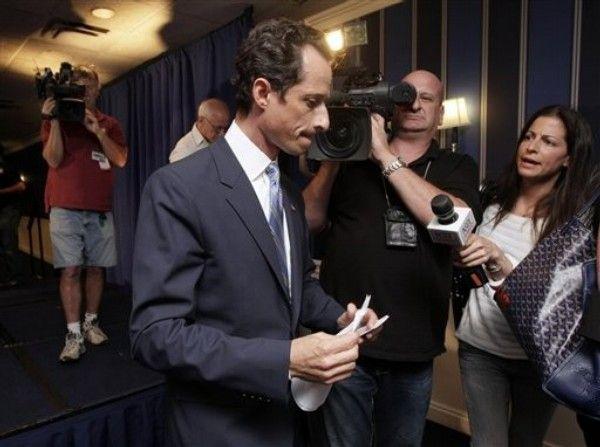
0For two frustrating weeks, President Obama and the White House watched the slow-motion car wreck created by Democratic Rep. Anthony Weiner. The White House labored to keep the president away from the rubber-necking attention when the New York congressman's crude online exhibitionism, lies, confessions and soap opera personal life careened through the airwaves for days on end.
As head of the executive branch and leader of the Democratic Party, Obama weighed various potential reactions: avoid questions; take questions but say nothing; take questions and help Weiner buy time; take questions and try to end the misery. Initially the White House said little.
Only after other Democratic leaders publicly encouraged Weiner to step down to focus on his family and his mental health -- and after Weiner opted to take a leave rather than a leap from the House -- did the president publicly give the congressman an unambiguous shove. Obama waited to follow a chorus, and then he questioned Weiner's "effectiveness" as a lawmaker. Rhetorically, Obama even placed himself in Weiner's shoes ("... if it was me, I would resign") in an awkward effort to both extend a hand while delivering a punch.
The White House knew the president would get a Weiner question during a "Today" show interview taped Monday in North Carolina. The president could have declined to mediate the mess and simply told Ann Curry that the denouement rested with the House, and with Weiner's constituents in New York.
Let's face it, hugging the sidelines at the White House while sexual scandals roar through Washington is not unheard of.
Sanders Seeks Caucus Trifecta Win to Close Delegate Gap
Sanders Fighting Perception He Can't Overcome Clinton Edge
Clinton Targets Trump as Sanders Circles
Sanders, Clinton Differ Sharply at Flint Debate
President George W. Bush tried something similar when former Idaho Republican Sen. Larry Craig was arrested for a men's room misdemeanor in 2007, then resigned in a panic, then fought back while denying he was gay before eventually retiring from the Senate on his own terms.
Unlike Obama, Bush was not running for re-election during the Craig imbroglio, but the White House argument at the time was that the president wanted to avoid the partisanship of criticizing Democrats for various improprieties, and wanted to play it the same way with Craig's "predicament," as the late White House press secretary Tony Snow termed it.
Of course Bush was not always so hands-off. Just ask former Sen. Trent Lott, who resigned as GOP leader in the Senate after a 2002 controversy sparked by praise he offered colleague Strom Thurmond during a 100th birthday speech. Lott's remarks about Thurmond's early conservative career -- praise similar to comments he made in 1980 -- burned through the Internet and then mainstream media coverage. Bush soon publicly rebuked Lott, which helped White House-favorite Bill Frist win election to the Senate's top GOP post in 2003, when the House, Senate and White House were all controlled by Republicans.
In 1994, when President Clinton believed he sorely needed House Ways & Means Committee Chairman Dan Rostenkowski to help shepherd his ill-fated health reforms, he stood behind the Illinois Democrat while a two-year Justice Department investigation proceeded. In a wave that brought Republicans to power after 40 years in the minority, Rostenkowski's constituents abandoned him in that 1994 election. He subsequently went to prison on mail fraud charges stemming from a House Post Office scandal.
But in the midst of the controversy in February 1994, Clinton appeared with Rostenkowski at events and refused to shun the veteran lawmaker. As Rostenkowski's power ebbed, Clinton said nothing about resignation. "[T]here is still a presumption of innocence in this country," the president told reporters during a news conference that month. "He has not yet been charged with anything."
On his way out of office after his own national drama with sexual misbehavior, lies and acquittal after impeachment, Clinton pardoned Rostenkowski in 2000.
Obama's pointed advice that Weiner "should probably step back," and House Minority Leader Nancy Pelosi's vague assurances Tuesday to colleagues that Weiner-the-Tweeter will not remain in Congress, sent an unmistakable message to New York.
No mercy.

The Danger Before the Attack
Leslie J. Sullivan • RealClearPolitics
Jon Finer’s Old and Dangerous ‘New Approach’ to Israel
Peter Berkowitz • RealClearPolitics
The President Deserves Better
John Ullyot • RealClearPolitics
Congress Doesn’t Need Another Blame Game. It Needs To Find What’s Broken
Jarrod Bernstein • RealClearPolitics
Democrats Won the Midterms. Common Sense Won, Too
Jordanne Kemper • RealClearPolitics
The 120th Congress Shapes Up
Carolina Lumetta • RealClearPolitics
RCP Today
Top stories on RealClearPolitics
The Takeaway
Polling intelligence and analysis delivered to your inbox
World News
Featuring the latest world news
Policy
Featuring the latest policy news
Support Our Mission
As part of RealClearPolitics, authors aim to provide balanced, non-partisan analysis by presenting top reporting and commentary from all sides of the political spectrum.
Trusted by policymakers and citizens alike since 2000